Showing posts with label free food. Show all posts

Monday, 17 October 2011

Rocket - easy to grow, delicious to eat

The warm, slightly peppery taste of rocket, or arugula, enhances salads.  It doesn't add crunch, like a crisp cos lettuce leaf, nor bright colour, like tomatoes or radishes, but it makes its presence felt in that subtle flavour and delightful heat that is quite unique.


The good news is that it's very easy to grow - it doesn't need especially good soil, nor even full sun.  And once you've grown it once, you should never need to buy seeds again, because it's so easy to save your own:)


Allow one plant to flower, the white, star like flowers aren't particularly stunning, but they aren't unpleasing either.  As the flowers die back, you'll see tiny green pods developing.  By all means snip a few off and add to your salad plate - they also have that delicious warmth of the rocket leaves.


The pods will grow to about an inch or so in length, and as the summer progresses, they will turn brown and dry.  This is when you go out with your paper bag, and harvest the crisp seed pods.


Bring them indoors and carefully split the pods.  I say carefully because if you're rough with them the seeds will catapault all over the floor - such a waste!  I put a sheet of paper down and collect them on that, then pour them into an envelope to store them.


You'll see that some of the pods develop speckly black marks, this doesn't affect the seeds, don't worry.  You'll get more than enough seeds from one plant to see you through next year - unless you've a large family, in which case, allow a couple of plants, or even more, to set seed - keep picking the leaves on the others so that they'll continue to grow.


Successional sowing, every few weeks, will ensure that you have young, vigorous plants to enjoy.

Thursday, 17 June 2010

food for free - butternut squash

As you know, we Yorkshire folk like 'owt for nowt' (something for nothing for those of you who don't speak the dialect!).

I've told you how to get yourself some free potatoes, and this time I'm going to show you how to get yourself some free butternut squashes.  These lovely gourds are fantastic roasted in the oven, or over a barbeque, or made into a delicious soup, or included in a casserole.

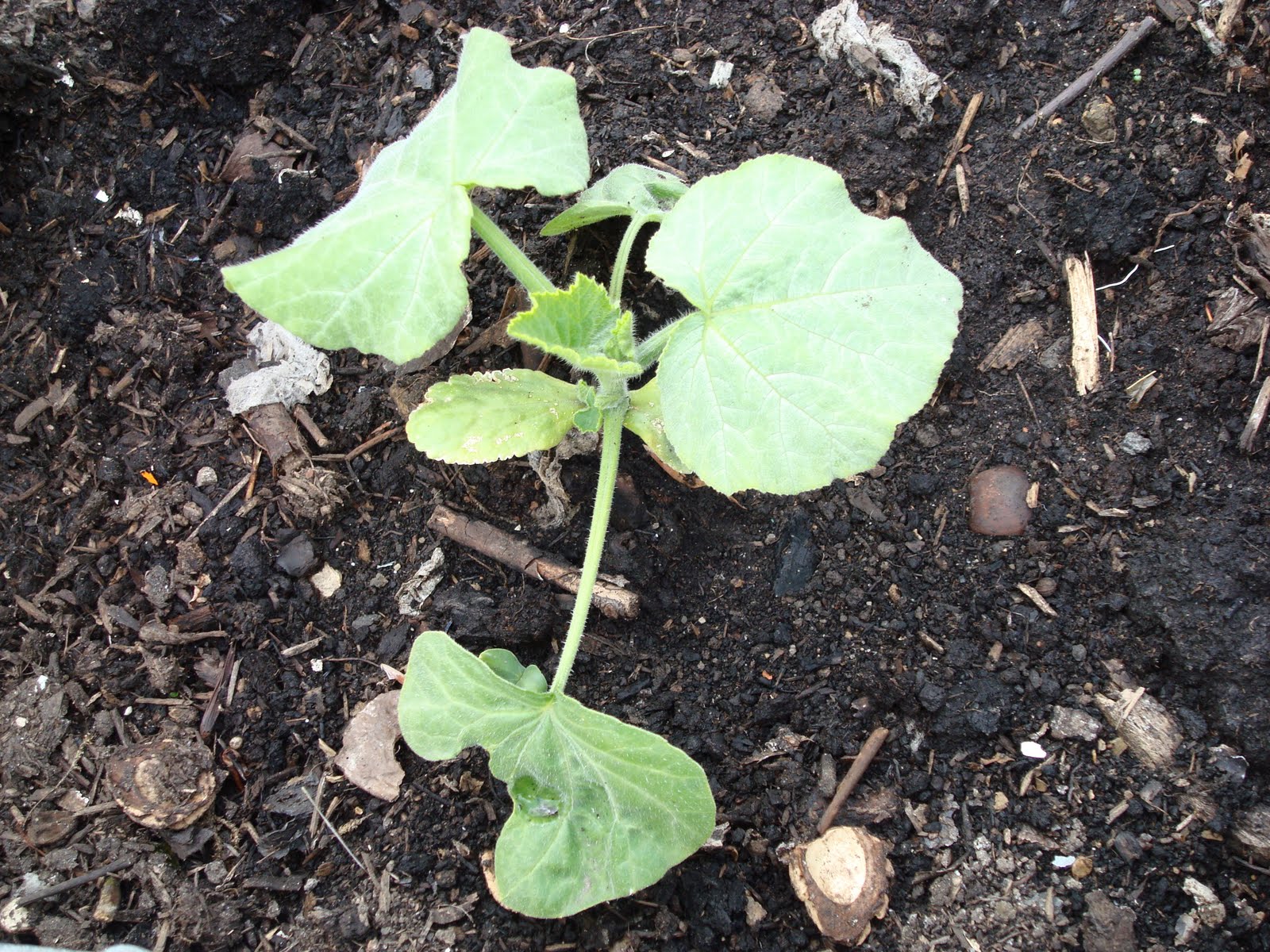
Earlier this year I bought a butternut squash, and saved the seeds from the centre.  I dried them on the windowsill, then sowed them about an inch deep in some organic compost.

About two weeks later I had seedlings, and a couple of weeks ago I transplanted them into one of the vegetable beds.  Two of them I have planted directly into the bed, but the remaining three I have potted up into old teracotta pottery "things". 


The reason for this is to try to save them from slugs for a little while, until they have time to build up some strength, and also to add a little variety to the garden.  Whether it's a good idea only time will tell.

Already there are signs of flower buds beginning to form, so, fingers crossed, I will have my free butternut squashes later in the year:-)

Thursday, 22 October 2009

runner beans, free food, seeds, harvesting

Well, it's that time of year when things start to slow down in the garden. Although the days may still become warm and sultry, it's decidedly cooler in the evenings, and the plants are beginning to shut themselves down for the winter. Some will die down completely, others will slumber gently until the gentle warmth of Spring calls them forth again.


My runner beans are still flowering their little socks off, or would if they possessed any! At the same time, they are creating the seeds for me to harvest, and dry out, ready for planting again in the Spring. Free food :)

I always leave one plant, at least, to grow long, plump beans, which I don't harvest to eat. I allow them to stay on the plant until they have dried out. They don't look particularly attractive when they've turned papery in texture, and brownish in colour, but they contain that precious cargo of next year's seeds. For that alone, they could be considered beautiful. They have served their purpose, and that's a wonderful thing.

The photos show the pods agains the sunlight. If you look closely, you can see the shape of the beans within the drying pod, as the light can pass through the thinning shell of the pod, leaving the shadowy outline of the beans. Harvest when brown and dry.


The last shows the dried out shell, and some of the hidden treasure from within, revealed just for you! And aren't the beans pretty? Such attractive markings, and glorious colours. Bright pinks are fashionable just now - I wonder what a dress would look like created from fabric patterned like the beans. Probably quite attractive, I'd say. But then, I'm biased.

I store my harvested beans in an envelope, on which I write the variety and the date - I used to think I'd remember, but nowadays I know I won't, so I write it down. If I have plenty, I share them with family and friends who also appreciate organic, fresh food.

Sunday, 13 September 2009

free food update, potatoes


Yesterday I dug up some of my free potatoes, as you can see. It's such a pleasure to discover just what the harvest will be. Sometimes there are very few tubers, others there are loads. That's one of the good things, though, you just never know what's below the surface. It really is digging for buried treasure!


This time I was very pleased. There had been three plants appeared, quite close together, in this spot of the garden. Presumable tiny tubers left behind last time I dug some up, as I had not planted them myself.


You can see how beautiful they are. The colander shows the small ones, the larger ones are beside them. Some of them had been nibbled by slugs, but the majority are beautiful. Firm golden nuggets to enjoy, simply

boiled, along with some freshly picked runner beans and sliced carrots. I stirred in a tin of chickpeas, and made a lemon and garlic mustard dressing which I poured over whilst the vegetables were still hot. Yummy.


The dressing was juice and zest of two lemons, 1 good clove of garlic, 1 tablespoon of mild mustard, and about 100 mls of olive oil. Whizzed together and seasoned with a lilttle salt this makes a refreshing, tasty dressing for warm veg.

Wednesday, 12 August 2009

tomato plants, flowers, free food, compost

I mentioned how to provide yourself with free potatoes in an earlier post. I've also got free tomatoes growing in the garden, which is looking quite lush, I'm pleased to say.


These free plants are courtesy of my "home grown" organic compost. Since I was a small girl, my mother has always had a compost heap - even when all we had was a back yard we kept a pile of tea leaves, egg shells, potato peelings etc in a corner, and the compost was used for plants in the small border.


Naturally, I too have always had a compost pile, or three! In my first small garden, it was about a square meter, and fed my tomatoes and potatoes - the only vegetables I grew in my first small garden.


In the large house where we lived for 19 years, we created compost bins out of pallets, so they were a very good size, and grew very hot - nighbourhood cats loved to settle themselves down on the top in the winter when it was cold.


Since my divorce, my garden has shrunk somewhat, but, as you've seen, David has built me three lovely raised beds to grow my vegetables in, and I have three largish compost bins to provide the nourishment that my organic vegetables need. .....................................................................................
Clearly, however, these bins are not reaching the same high temperature as the older ones did, as the seeds are obviously surviving - hence the tomato plants. The seeds have lain dormant in the compost until it has been spread onto the beds, and there they have sprouted along with the seeds I have sown.
So ............. more free food:-)
First the sunny, starry yellow flowers, then the tiny green fruits follow on. (You did know that tomatoes are fruits, not vegetables, didn't you?) See how tiny they are? They haven't ripened yet, as the beds weren't finished until summer was already upon us, but they will. Nature is abundantly kind this year:-)

Wednesday, 29 July 2009

potatoes, flowers, baking, microwaves, free food

One of the tastiest, cheapest, and simplest meals has to be an oven baked potato in its jacket. Jacket baked potatoes have been one of my favourites for as long as I can remember.


I remember years ago, probably about 25 or so, Peter bought me a cookery book by Clement Freud, a comedian we were both very fond of. He seemed to quite enjoy his food, and I was enjoying the book until I reached the part on potatoes.


He plummeted in my estimation when I read that he considered that the potato baked in a microwave oven was just as good as a "real" oven-baked specimen.


Don't get me wrong, I'm not against microwave ovens. I had one of the first turntable models about 30+ years ago, a Belling, that, apart from the light failing, is still being used to sterilise compost for the garden!!!


However, although they speedily cook a potato in its skin, there is none of the depth of flavour that develops with the exposure of the skin to the heating elements, or gas generated external heat of a regular oven. A microwave jacket potato is fine if it's going to be served split and covered in a tasty sauce, where its purpose is to provide bulk, but not flavour.


But when the potato is the star of the meal, and an oven-baked jacket potato deserves this status, then only the real deal will do. That golden to almost charred exterior, with the slightly firmer amber layer beneath, then the creamy, fluffy centre, just waiting for a little salt and a drizzle of olive oil, or, yummy, toasted sesame oil. Oh, yes, it's a star. There's no contest.


That said, I have discovered a cheat's method of achieving pretty near the perfection of the real thing, but using the microwave. Here's how you do it.


Microwave your jacket potatoes as usual until just done. Heat the grill while they are cooking, then grill both sides of the hot potatoes for about seven minutes each side, until they are well toasted. The moisture inside the potatoes saved them from actually toasting, and they really do taste very good indeed.


Since there's usually just me, or David and me here when I'm cooking, this is the way I often do them. It's not economical to have the big oven on to bake a few potatoes.


Did you know that potatoes have beautiful flowers? No? Well, they do. Just look at these. They are a beautiful, pale pink. When the flowers have died back, then I know there will be a lovely crop of tubers ready to dig up.


One of the best bits is - they are free!! Yes, really, free. They have cost me nothing. If your potatoes have been too long in your vegetable basket, and are growing arms and legs, or shoots, as we call them, cut off the shoots, plant the bit of potato in the ground attached to the shoot, water and wait, and you will almost undoubtedly grow your very own free crop of potatoes.

Isn't nature wonderful?????